%20opaque%206-11-24.png)
#35 How to Fight a Fish,

Updated: Jun 9
How to Fight a Fish, Without Going to Jail.
If you are new to the world of fly fishing, or just learning to Fly Fish, by now you should have acquired some skills that you have learned by either following me, watching You Tube videos or whatever means you have chosen, but now we are going to cover :how to fight a fish".
You’ve done it, you have a rod, you can do some basic casting, you have learned some skills for rigging, purchased a few flies, and now you are going out to catch a fish! NOW WHAT?
I read online Gurus talking about fly fishing, how to cast, how to rig up, how to read the waters, but very often I notice these online Gurus overlook the topic of “what to do when you DO catch a fish”.
Fear not, let’s spend a few quality moments together and we will talk through some of the in-and-outs of hooking and actually being able to land fish.
Let’s talk for a few minutes about a fly rod and what a great tool the rod is for fighting and landing fish. First off you need to understand that a fly rod is virtually 9ft. long shock absorber and is designed to help you not only cast a fly line, but also land fish.
Let’s do a quick drill to help you better understand what I’m blabbing about. You will need a fly rod and a friend to help, you should be outside, or an area with at least 10ft. ceilings. Ok, are outside, and have your fly rod, and your friend? Go ahead and rig up your rod as you normally do and pull about 12ft. of line out of the tip of the rod. (Remember no hooks) now I want you to have your friend hold the fly rod completely vertical, or the 12:00 o’clock position. Now grab hold of the end of the leader, by pinching it between your fingers, and thumb (that’s it).
“Ok so far so good, but what is going on, I’m just holding the leader between my fingers”,
Now comes the magic moment, I want you to start slowly backing away from you friend while still holding the line between your fingertips. Make sure they are holding the rod vertically as you back up. Can you feel how easy it is to hold the line between your fingers. This should be very similar to a fish on the line as you have your rod straight up in the air, or 12:00 o’clock. Now for the teaching moment, I want you to keep backing away slowly, have your friend begin to lower the rod tip toward you, (keep the line tight) the rod should be pointing more toward you. Can you feel how it is becoming harder and harder to hold the leader?.
As you are backing further away and the rod tip is getting lower, and lower you are losing the shock absorbing power of the rod, (you are taking away the flex of the rod). Soon you will not be able to hold the line, and it will pull out from between your fingers. (twang)
Try this a few times until you feel the point at which the rod will loose the soft flex and you feel the hard pull of the line.
When I’m teaching newcomers to the sport I can teach them the correct way to hold their rod, while fighting a fish. Normally I do this on dry land first so they can become comfortable with correct position. When you are fighting fish your rod will need to stay as close to the 12:00 position as you can. When you drop the tip of the rod and begin to point at the fish, this is when the line pressure increases, and you risk the fly pulling out, or breaking the line. By using the shock absorber, we can use very tiny flies and tippet that is under 2# and still land very big fish.
The reason it is important you understand how the fly rod helps when fighting a fish is very important before we move onto the next part of our little discussion today. When you are fishing you will be able to see when your buddy has too much pressure on a fish, and you can almost know when you will here the dreaded “TWANG” of the line breaking.
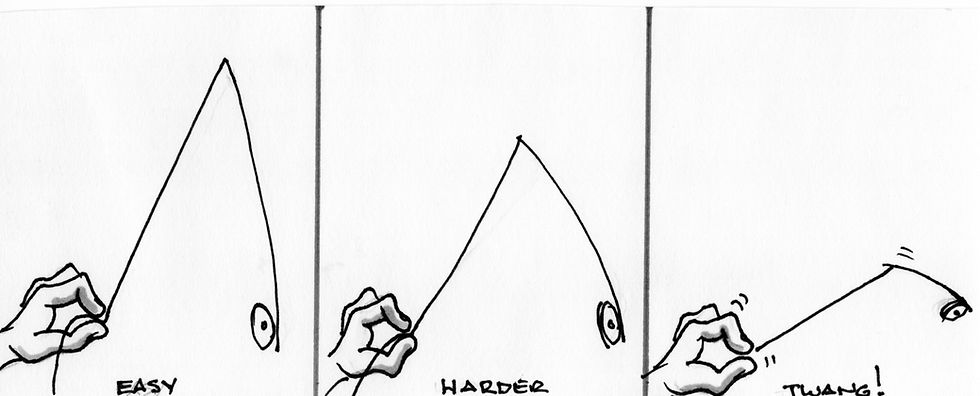
Rod position:
Now we know how to avoid breaking off fish, lets learn how to work a fish correctly so they can be landed and released. When you are fighting a fish in a river you have the upper hand with your fly rod. We will learn how you can steer a fish in the current, use the current to wear them out quicker, (Stillwater is a little different).
When you are fighting a fish and holding your rod strait up in the air, you really are not putting any pressure on the fish, you are only “lifting the fish”. If you hold your rod up and bent and then lay the rod to your left or right, so the rod is closer to the water, this is when you put real pressure on a fish. Put side pressure on a fish and you are forcing the fish to not only pull against your rod, but also fight the current. By using side pressure, you can literally steer a fish left or right to swim them away from logs, or waterfalls. Practice this the next time you fight a fish and see how you can turn them left or right.

Remember a fish’s natural defense is to swim “away” from trouble, you are the trouble they want to swim away from. By swimming away from you and pulling against the current at the same time you are going to wear down a fish much faster, and you will be able to land the fish, and get them back in the water as soon as possible.
Handling Fish:
Now you have read the how to part of landing a fish, let’s look at what to do when you have them in your net. I’m not going to cover the pros and cons of the different types of materials for nets, other than to say a net is very handy to help land a fish in moving waters.

Ok you did it! You successfully hooked and landed a fish, it’s in your net, (now what)?. Most people who believe in catch and release believe that a fish should stay in the water the entire time while you remove the hook. Good in theory but you might need lift them to do something, important issue is to try to minimize the time out of water. Think out it like this: you just ran a 50 yard sprint, crossed the finish line and suddenly you are forced to hold your breath! This is what fish go through after being caught, so just try to be cool about time out of water. I know we all want that killer photo op, but first let the fish get their breath, then lift them for that Facebook cover photo.
Touching a fish, yuck:
Try to be a good steward of the resource whenever you can and try to keep a healthy population of fish in the rivers and streams of your local places where you fish. I have had the unfortunate case of watching great fisheries destroyed by people who do not care about the resources, or were not correctly informed.
Anytime you need to touch a fish (especially Trout) try to remember to wet your hands before you handle fish. The slime that covers their scales, although yucky to touch, is vital for our little swimming friends. If you wet your hands first, and try to be gentle, they can go right back to their happy little lives once you’re done with CPR, (Catch photo release) ready to be caught next week.
Cheers
Gary, AKA LaMachine
As always feel free to give me a shout


Comments