%20opaque%206-11-24.png)
#34 Safety and FLy Fishing is a Thing!

Updated: Jun 9
Safety is not just for safe people, It is for Fly Fishing Also
If you have followed along with me as I ramble along into the Ethernet of space, I just want to say thank you for humoring me. If you are just learning to fly fish or are new to the casting game, I hope that you are able to use and find helpful some of my little pearls of wisdom, today we are going to talk about "Safety and Fly Fishing".
I know some of you will poo-poo today’s topic, but I can tell you from experience, I have seen some wacky things happen while on the water.
I recall a Husband and Wife guide trip one day later in the fall. Fall in the Eastern Sierra’s is usually accompanied by cooler temperatures and windy days. While on this trip I had the couple spaced about 40 ft. apart so they could fish without interfering with each other. I recall this day was particularly windy, and I insisted that my clients wear sunglasses, (even though it was a cloudy day) Both parties begrudged and finally agreed.
We were about 1.5 hours into the trip, clients were fighting the brisk fall winds, cool temperatures, but managed to catch a few fish, when suddenly the Husband lets out a quiet “yip” and tells me to “come here”. I was walking toward the Husband when he began to walk away from me. We walk about 50 ft. from his Wife before he finally turns to face me. It was at this time when I noticed a size 14 Prince nymph securely lodged right between his eyebrows. This fly was lodged so deep that the fly was completely flat on his skin.
He explained the reason he walked away was so that his Wife would not see the fly currently impaled on his forehead. We carefully and quickly removed the facial piercing, stopped the drops of blood from being visible to his Wife. The entire time of the first aid session he thanked me over and over for insisting that sunglasses be worn.
If he was not wearing protective glasses this simple and amusing tale could have turned out with a very different outcome.
As you are reading along and find yourself shaking your head yes, then please read on and we will talk about more silly little things that may keep you safe and ensure you have many more fun trips to the water’s edge.
Hear is a quick list of items that you should at least consider before spending time on the water.

Head covering:
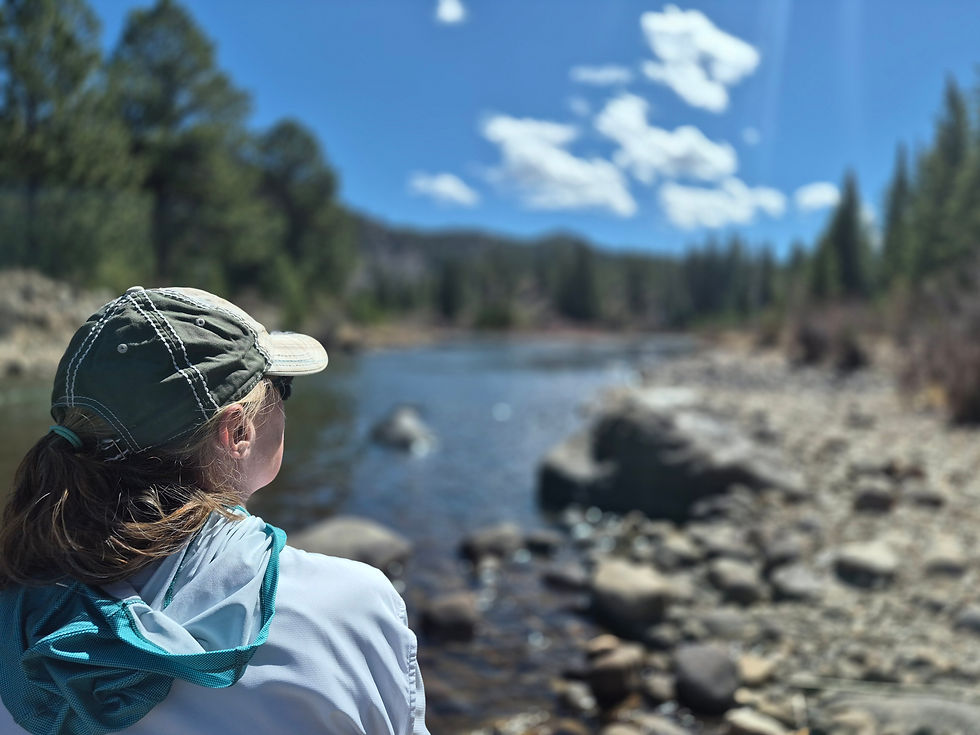
If you spend any time on the water, you should at least consider wearing something to cover the top of your noggin. Hats will keep the sun’s rays from beating down directly on the top of your head and try to avoid skin cancer issues. A hats brim can give your eyes shade from the rays of the sun as well as shielding your eyes from glare. Reducing glare can help give you better vision into the water.
Sunglasses:
Like “DUH” if you are not wearing glasses while on the water, then you should re-read the above story. When you choose which glasses to wear this is really the case of you get what you pay for. Your glasses need to be polarized to help block out the sun’s rays as well as providing better vision into the water. When it comes to polarized glasses this truly a case of “you get what you pay for”.
For many years I would buy glasses that were polarized, but were not good quality lens, until that fateful day that when I had to have eye surgery to remove a “Pterygium” from my eye (Pterygium is a fleshy, triangular-shaped growth on your eye's conjunctiva) I still remember my eye doctors comment when he said “from now on, buy good glasses and make sure they are glass, not plastic” Today plastic lens have come a long way since that fateful day, but I will always buy glass lens and make sure they are double polarized. It has been 20 years and so far my eyes have been trouble free. (Protect your eyes).

Sunscreen:
I know I might sound like an old man to someone who is 25-35 years old but remember “the bill will come due”. I now have my annual visit to the Dermatology office to get little thingies burnt off my face and neck or ears. I have always applied sunscreen when on the water, but now it’s like a religious event before I leave the house.
More often while out on the water, the new uniform for fly fisherman is the hooded sun shirts. I think these are one of those, “it’s about time” pieces of practical outerwear, but I have to giggle from time to time when I see 10 out of 15 people all wearing the same color hooded sun shirts, (looks like a secret club) Either way keep up the protection, you will thank me when you are 60.
Sunscreen part II :
If you fish in a part of the county that is blessed with all manner of flying and biting insects. There is good news for you, I have been using sunscreen and insect replant all-in-one product. It does fairly good of keeping most pests off of me. If you need more fire power you can always break out the “big guns” and use a product that has DEET (diethyl-meta-toluamide). DEET is very effective in keeping bugs off, but it will also, like magic melt a fly line or leader. If you are going to use DEET, just make darn sure your hands are clean before you touch your fly line again.
Sun Buffs:
Over the years, I have become a big fan of “Sun Buffs”. These floppy cloth tubes that pull over your head are very versatile. You can use them to cover your neck or cover both your head and neck at the same time, but the big advantage is in the heat. You can dip these buffs in water, and it will keep you cool for quite a while, (feels good when it’s really hot). In the Winter they can give your ears a much needed break from the chill in the air.
Sun gloves:
Some people opt to wear sun gloves, and I have to say that depending on the amount of time you spend on the water, these are not a bad investment for your skin. If you look at your rod hand when fishing, you will notice that it’s mostly up, facing the sun. At the end of a day of fishing, you may notice your casting hand will be more sunburned than your other hand. I know a few people who actually get sun poisoning on this hand. If this is you, maybe sun gloves might be right for you. One other thing to consider is when fishing in the Winter months, your fingers will get very cold, and keeping them warm will become really, really really important.

Hydration:
Keeping yourself hydrated might sound silly considering that you are surrounded by water most of the day, but since I get paid to administer first-aid in the Winter months, I see firsthand the effects of dehydration on the human body. If you are planning to fish in an area that is higher in elevation keep the following information in mind:
When heading out on any adventure the elevation you’ll encounter should be taken into consideration. In short, at higher elevations (especially above 5,000 feet) your body works harder, your respiration rate goes up, and your body loses water faster than it would at sea level.
Drink plenty of fluids and try to stay hydrated during the course of the day. If you begin to feel lightheaded, or flush, or just weak, drink water, or some other fluids, (and no, beer is not counted as fluids) Alcohol will cause you to dehydrate faster if you are in the sun.
Snacks:
Last but not least is snacking, try to keep a few snack items with you while on the water. When I fish I always have that emergency power bar stuck somewhere on my person. Usually by the time I do realize that I have one with me, it is about 2 years past the expiration date, but I will eat it anyway.
Let’s go ahead and put a cork in this topic. I have told you some of my personal experiences from years and years of being on the water, (remember my High School class picture was a cave painting). Over time you too will be able to look into the faces of the young children and tell them your own tales of woe.
For now, take what I talked about with a grain of salt or not, but the information is now yours.
Have fun out there and be safe.
Gary, AKA LaMachine


Comments